Ever since fuel deliveries began, the industry has undergone more rapid and dramatic changes than it has today in 2026. The main reason for these changes isn’t just new technologies; it is a “perfect storm”.
In late February 2026, there was a military attack by the U.S. and Israel against Iran, which caused the closure of the Strait of Hormuz shipping channel, through which approximately 20% of the world’s oil is shipped daily. The price of Brent crude oil had been around $60 a barrel at the beginning of the year, but surged up to $100 by 3/9 and even reached $108. Analysts at Wood Mackenzie warned that prices ranging from $150-$200 per barrel, or higher than that, should not be ruled out.
Notably, none of this has been background noise for companies that regularly provide fuel; this is their operating environment in March 2026. During such times when procurement costs rise rapidly and supply lines break down, it will become increasingly evident and costly (to those companies that rely solely on spreadsheets) how much of a gap exists between those fuel companies that have invested in technology and those that have not.
Technology is not just the future of the fuel delivery industry. At present, in 2026, technology is the essential survival tool.
1. A World Under Energy Pressure: Why This Moment Matters
The IEA identified the Middle Eastern conflict of 2026 as “the largest disruption in the history of global oil supply.” When the Strait of Hormuz was closed, and barrels filled up in storage, countries with large amounts of international oil exports (Saudi Arabia, UAE, Kuwait, and Iraq) significantly reduced production.
In the days after the conflict began, the price of crude oil increased by over 25%. The price of crude oil has gone from $108 per barrel (bbl) to more than $100 since March 2026. Diesel and LPG, which are used to fuel delivery fleets and industrial operations, are experiencing the greatest tightness among all refined products.
Fuel delivery companies are facing overwhelming increases in procurement costs, while their B2B customers are cutting costs wherever possible. Companies that have the technology to manage their procurement dynamically, reroute to avoid road congestion, and provide complete transparency to their clients will be able to survive and absorb this shock.
Companies that are dispatching drivers over the phone and tracking inventory on paper are not only losing sales to their competitors; they are also suffering due to inefficiencies that the volatility of the marketplace is exposing.
Read: 6 WooCommerce Theme Development Mistakes You Shouldn’t Make
2. On-Demand Fuel Delivery Apps: The Foundation of a Modern Operation
At present, we are observing the most significant change of the decade for the industry as it makes its transition from traditional, scheduled and contract-based fuel delivery systems to an app-based model where every drop of fuel will be available upon demand, anytime you want it, anywhere you would like it delivered to you, whether you’re in your truck, at the jobsite, at home, etc.
This type of model has been in development for many years now, but is experiencing very rapid growth today. The global market for mobile fuel delivery is estimated at $1.5 Billion by 2024 and is expected to be $3.2 Billion by 2033, marking +$1.7B in revenue growth at a 9.2% CAGR. There has also been a 45% increase in the number of users using on-demand fuel delivery applications over the last two years.
For businesses looking to understand how AI is being layered into these platforms from the ground up, from smart dispatch to demand forecasting, this detailed guide on AI in fuel delivery by Nectarbits covers the full transformation happening in next-generation fuel delivery services.
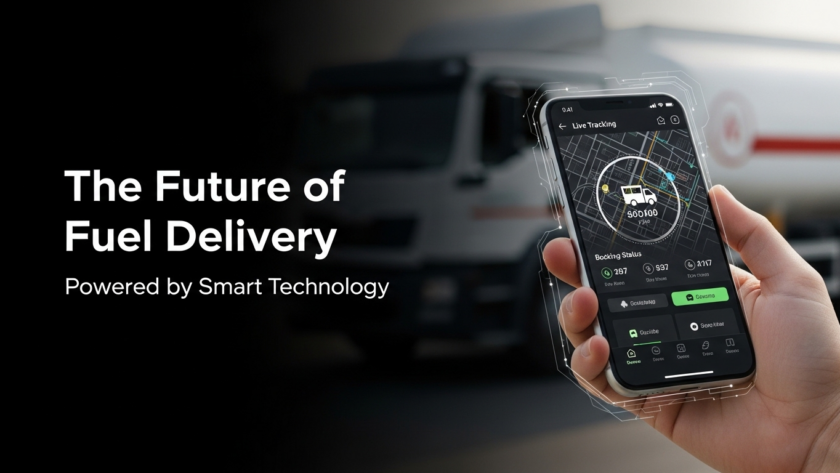
What makes an on-demand fuel delivery platform genuinely powerful is not just the customer-facing app. It is the operational infrastructure underneath: automated dispatch, real-time driver tracking, digital invoicing, integrated payments, and fleet management dashboards. Together, these reduce cost per delivery and increase the number of deliveries each tanker can complete per day, directly improving margins even when procurement costs are elevated.
3. AI and Route Optimization: Where Margins Are Won or Lost
When fuel procurement costs increase and every route is important, AI-optimized routing is not an option; it is a critical method of preserving operational margins. At this moment, AI-based routing is offering the most improvement and measurable benefit to fuel delivery.
What AI Optimization Can Do for You
- Dynamic Re-Routing: Real-time traffic, road closures, and new orders can all be taken into account in real-time on a continuous basis. Drivers can be rerouted prior to delays compounding.
- Multi-Stop Sequencing: AI calculates the best route for dozens of stops using factors such as time windows, vehicle capacity, fuel type, and utilizes multiple routes at the same time. This cannot be replicated by any human dispatcher on a large scale.
- Predictive Demand Positioning: Machine Learning models place tankers in high-demand zones prior to peaks in demand to reduce response times and increase asset utilization.
- Fleet Consumption Optimization: AI considers the load of the vehicles, terrain, and the speed profile of the vehicles in an effort to reduce the amount of diesel consumed by the delivery trucks themselves. This is increasingly important at a time when diesel is at record highs.
The evidence is very clear. The guide shows that fuel delivery companies can reduce expenses up to 30 percent when utilizing real-time route optimization technology, a critical aspect of profit margin preservation in today’s fuel pricing environment.
AI Dispatch for fuel delivery businesses is reducing total fleet operational costs by 20% – 30% and improving on-time delivery by 35% – an extraordinary savings for a fleet-based market.
4. IoT Sensors: Real-Time Intelligence Across Every Tank and Tanker
Manual fuel monitoring, dip sticks, paper logs, and estimated consumption- belong to a different era entirely. IoT sensors installed on storage tanks, delivery vehicles, and customer equipment have replaced guesswork with continuous, real-time data.
Smart Tank Level Monitoring
Connected sensors report fuel levels, temperature, and pressure in real time, straight to a dashboard or mobile app. Fleet operators managing fuel across multiple sites can see everything at once. Automated low-level alerts trigger reorder requests before tanks run critically low, eliminating the expensive chaos of unexpected fuel-outs on active job sites.
Theft Detection and Loss Prevention
Fuel theft is a high, often under-reported cost in the delivery industry. IoT sensors combined with AI anomaly detection identify unauthorized valve openings, unexpected volume drops, and vehicles deviating from assigned routes, all in real time. Businesses that implement this typically discover losses they did not know existed, recovering 60–80% within the first quarter.
Digital Proof of Delivery, Eliminating Disputes
Flow meters integrated with the platform record the exact volume dispensed at each stop. That data flows directly into the system, generating a digital receipt and invoice automatically. No disputes, no paper, no delays. In a high-pressure, high-cost environment, knowing exactly what was delivered and proving it instantly is a fundamental business requirement.
5. Real-Time Tracking: The Trust Infrastructure That Retains Clients
Uber, Amazon, and other similar platforms will shape customer expectations by 2026. B2B procurement managers, who ultimately choose the fleet and site fueling providers, expect real-time visibility, accurate estimated time of arrivals (ETAs), and real-time notifications. Companies that do not provide these services will lose contracts to those that do, regardless of price per litre.
For enterprises that operate construction, mining, or logistics fleets across many sites, having a real-time tracking dashboard isn’t an option; it’s a procurement requirement. Customers require visibility into fuel usage at all sites, delivery patterns, scheduled deliveries, driver compliance, and cost reports at a glance, accessible from any device, any time.
Companies that provide real-time delivery tracking experience a 40% reduction in inbound customer service calls and significantly higher net promoter scores (NPS). In this rapidly changing and price-sensitive market, providing customers with transparency and reliability will be the key to preventing them from leaving your company.
6. ERP Integration: The End of the Spreadsheet Era
One of the largest indicators of where the future of the fuel industry is headed is an increasing number of fuel delivery companies that have simply outgrown manual processes. According to the 2026 Fuel Technology Trends Survey conducted by Cargas Energy with over 200 fuel dealers across North America, the two biggest pressures facing respondents were finding and retaining employees and managing costs. Approximately 20% of respondents indicated they were struggling to get disconnected software applications to work functionally together.
The answer to these challenges is an integrated fuel delivery platform. Once a delivery occurs in the field, the platform simultaneously updates inventory, generates and sends invoices, tracks driver activity, syncs with the customer’s procurement system, and updates real-time dashboards without any manual data entry. The savings realised from eliminating manual work across hundreds of deliveries each week are substantial.
Given the current environment, elevated costs, pressure to hire, and demanding customers, every minute spent on administrative work returns a minute invested into growth.
Key Market Data: Fuel Delivery in 2026
| Metric | Data Point |
| Mobile fuel delivery market (2024) | $1.5 Billion |
| Projected market size by 2033 | $3.2 Billion |
| Market CAGR 2026–2033 | 9.20% |
| Surge in on-demand app users (2 years) | 45% |
| Oil price rise since Jan 2026 (Hormuz crisis) | +25% – $108/bbl |
| Cost reduction from the AI route optimization | 20–30% |
| On-time delivery improvement with AI dispatch | Up to 35% |
| Drop in customer service calls with live tracking | ~40% |
| Fuel theft recovered via IoT detection | 60–80% |
7. The Road Ahead: Building for the Next Decade of Energy
The same stack of technologies being used for traditional fuel delivery will also be used to develop mobile (on-demand) apps, real-time tracking (IoT monitoring), and AI-driven dispatch systems for the future (mobile EV charging units, hydrogen delivery pilots, and bio-fuel distribution networks) will utilize many of the same core platform features.
Companies making investments in smart fuel delivery technologies today aren’t just looking to resolve a challenge for the year 2026. They are creating the logistics and software systems necessary to enable the next decade of energy distribution, regardless of its source.
The planned 2026 Strait of Hormuz crisis has ironically accelerated this evolution and added urgency to the need for governments and businesses to diversify their energy distribution chains and rethink their dependence upon a single geographic chokepoint for 1/5 of the world’s oil supply. The case for filtered, technology-enabled, local energy-sourcing and distribution methods has never been more valid than it is in today’s environment. On-Demand Fuel Delivery will provide the intelligence, visibility, and flexibility that are essential components of the solution.
The future of fuel delivery will not exist at the gas station (forecourt). The future lies with the delivery of fuel and its distribution model via centralized software systems, AI model intelligence, IoT networks, and mobility technology that will provide fuel delivery in a more efficient, fast, and highly resilient manner than is currently available for delivery.
Final Thoughts
There’s currently no more pressing reason than right now to be modernizing the technology used in the fuel delivery sector. Rising oil prices, disruptions in the Middle East, a national shortage of qualified drivers, and tough B2B customers all affect fuel suppliers simultaneously. While technology cannot fix geopolitical instability, it will provide a distinction between those fuel delivery companies that will weather this storm and those that won’t.
Route optimization provides margins when fuel costs are rising. Real-time GPS tracking of each delivery provides the level of service necessary to retain customers during volatile pricing periods. IoT fuel level monitoring prevents inventory shrinkage when every litre matters, especially with smart IoT integration. A robust on-demand app provides the level of service necessary to secure and maintain contracts with large enterprise customers. Collectively, these technologies aren’t the future of fuel delivery; they’re today’s standard. Those companies that still consider them optional will be out of business soon.