
Have you ever found yourself on a page and thought this is not what I wanted? You probably were looking to buy an electric car but ended up on a homepage with unrelated offers on SUVs and family vans. There’s nothing wrong with the page itself, it just didn’t resonate with you. Therefore, you clicked off right away. No second thought. It simply did not feel right.
That seemingly short instance happens every time. What if websites had the ability to truly understand what each person was looking for? Not in some vague way, but in a really detailed way. The site recognizes your interests, notices what you click, and maybe even remembers your last search. It sounds a bit like science fiction, right? The fun part is, it is actually happening. There is content at every corner. Articles, pop-ups, product pages, and videos. It’s just about everywhere. And amidst all this noise, what really grabs our attention is a personalized experience for us. Something that looks like it was done for ourselves.
That’s exactly where adaptive websites come in. They aren’t static websites that just sit around waiting. They watch, learn, and change. They respond to what the visitor is doing so that the experience becomes more useful by changing in real-time to the behavior of the user. It’s a little like conversing with someone who listens, not just nodding along, but picking up on what you like and what you need and anticipating what you might want to do next. That is what makes adaptive websites so exciting: They feel more human, more helpful, and quite frankly, a lot more fun to interact with.
In this blog, we are going to know what makes a website fail traditionally, why adaptive website technology is so important, and how businesses, in particular SaaS businesses start making smarter experiences that actually connect with their users.

1. Why Generic No Longer Works
Now that we have opened the door to the capabilities of adaptive websites, we will look more in-depth at why the old school approach of doing business simply no longer works. Conventional websites, those that can display the same thing to all the visitors are the kind that may appear as the easiest option. However, in a world where various needs abound and expectations rapidly change, such strategy can be much more of a missed opportunity.
Consider that. Why continue to expose everyone to the same homepage or the same message when we recognize that we have people in our audience who seek different things? It’s similar to offering just one menu to every guest in a restaurant, regardless of their purpose for dining there. Some might stay, but many will move without ordering. This is what happens with generic websites – treating every visitor the same. And that leads to something marketers quietly worry about. The loss of conversion.
People’s expectations have changed in today’s time and require an authentic experience. Studies show that over 71 percent of consumers anticipate personalized services from organizations. Approximately 89 percent of business leaders attribute their success in the near future to personalization. This change in expectations is already changing how users interact online.
Consider a firm named Acme Lease that provides car leasing services. On its website, every visitor sees the same images and offers for an electric car, or even a reliable used one. With no effort made to direct different visitors to content suitable for them, the site simply does not respond to who is visiting or what they might be searching for. And when that kind of connection is missing, so is the opportunity to turn interest into action.
2. Understanding Adaptive Websites
Now that we have seen the shortcomings of generic websites, it is natural to ask; what then is the smarter alternative?. What type of site could observe what you are interested in and give something back to you that is helpful? That is where the concept of adaptive sites begins to unfold.
An adaptable website isn’t just any site out there that’s had a few things tweaked on it. It dynamically generates content based on who is visiting the site, what those visitors are doing, and possibly where they are coming from. It doesn’t give a similar output to everyone but constructs a replica of the site that fits every visitor.
Going Beyond Basic Personalization
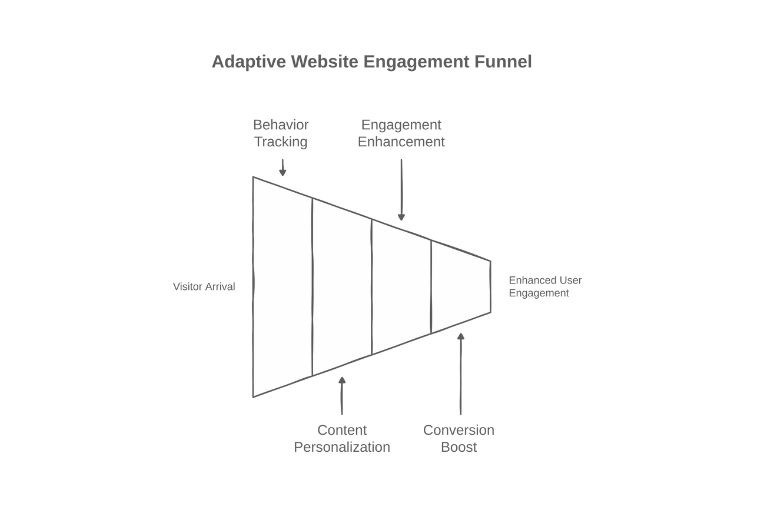
This is more than simple personalization. It is what is known as hyper-personalization. It implies influencing what an individual views based on real-time behavior, preferences, and engagement patterns. It is a little bit like going into a shop, where everything is a little bit rearranged in silence according to your interests. The combination of clever technology and solid strategy enables this. Machine learning and artificial intelligence work in the background. They scan through vast piles of information, detect trends and begin anticipating what one may desire next. They observe how people navigate the site and tweak it slightly in ways that can have a significant impact.
There are also certain web personalization tools that can bring that reality to life. Dynamic content, behavior tracking, cookies, session data and user profiles help ensure that what a visitor sees feels relevant and timely.
Take for instance, the Acme lease website could adapt by itself. A person looking for electric vehicles would land on a homepage with clean EV model visuals and sustainable messaging. Another visitor shopping for used vehicles would see a version focused on affordability and reliability. Same company, just a completely different experience based on who shows up.
This idea is already being used by companies we all know. For example, when an online store changes recommendations based on what you clicked or bought before, a travel site recalls your last search and advertises new choices in accordance with your interests. Such adjustments make visitors feel understood and that often results in greater engagement and action.
However, the figures speak volumes. The research has shown that interactive website designs can increase a conversion rate by up to 43 percent, indicating how responsive people are to engaging experiences. It is shown that localized content is engaged with 12 times as much as generic messaging, hence, relevance obviously plays a role. And with machine learning allowing websites to adapt in real-time, it is more convenient to retain someone and lead them (with a couple of nudges) on the right path. The idea here is straightforward: the more targeted and interactive a site seems, the more users will engage with it and take relevant action.
3. Key Elements and Strategic Implementation
At this point, the concept of adaptive site seems to become much more tangible. We have understood how it works, why it is important and what sort of impact it may bring. But how do you build one, anyway?
There are three fundamental bases of every adaptive site. The former is visitor segments, and this implies the fact that you have various people with various goals in your audience. The second group is that of customer data which makes it easy to find out what has been done in the past and what they could be interested in at the time. The third is adaptive content and it is based on that information to make up what they see and experience.
To pull all this off, you have to know what the user will do. This is where web personalization platforms come in. They tell you what individuals are up to on your site and also guide you to come up with experiences that are linked to their purpose. Although creating an adaptive web site might look complicated, the easiest way is to begin with baby steps. Start with your most significant audience segments. Make the data collection method transparent and leverage it to make meaningful changes. Such adaptations lead to an increasingly intelligent and more accurate experience in the long term.
A Three-Phase Roadmap
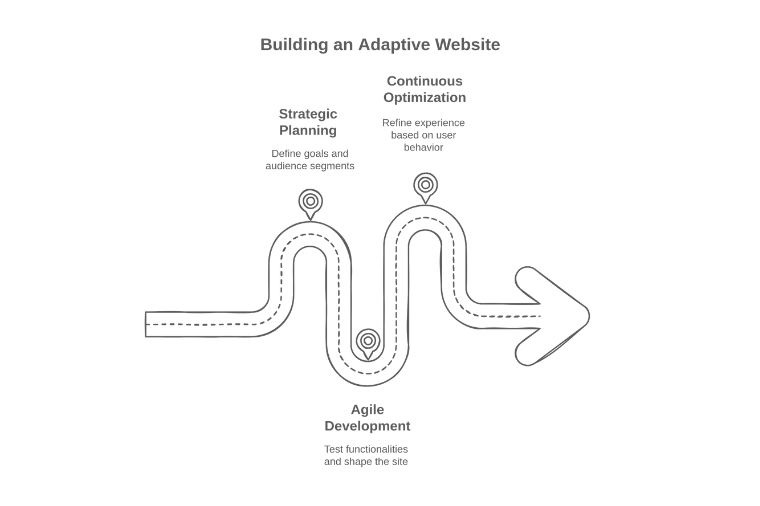
The typical procedure consists of three major phases. Strategic Planning is first; that is when you define your goals and map out who that audience is. Next comes Agile Development, where the site starts to take shape and important functionalities are tested. Finally, there is Continuous Optimization, where you learn from actual user behavior and refine the experience based on that input.
Back to Acme Lease. Suppose they would like to receive more quote requests from visitors who are interested in electric cars. They target a group called Electric Car Lovers and analyze such information as page visits and search filters to comprehend what is required by this audience. Thereafter, they edit the content to display specific recommendations and messaging that directly appeal to them.
Other brands have also opted for a somewhat similar path. Take, for instance, Birkenstock. Their online store runs quick surveys to harvest insights on various kinds of shoppers. That feedback goes back to further shape their email campaigns and establish connections with people. It’s a little step but goes a long way in enhancing engagement.
4. The Toolkit for Smart Websites
Having looked into the key pillars and strategies behind adaptive websites, the next step is to examine what makes them tick. Intelligent planning lays the groundwork; technology ultimately breathes life into the experience. So what exactly sits inside the toolkit of a responsive, adaptive website.
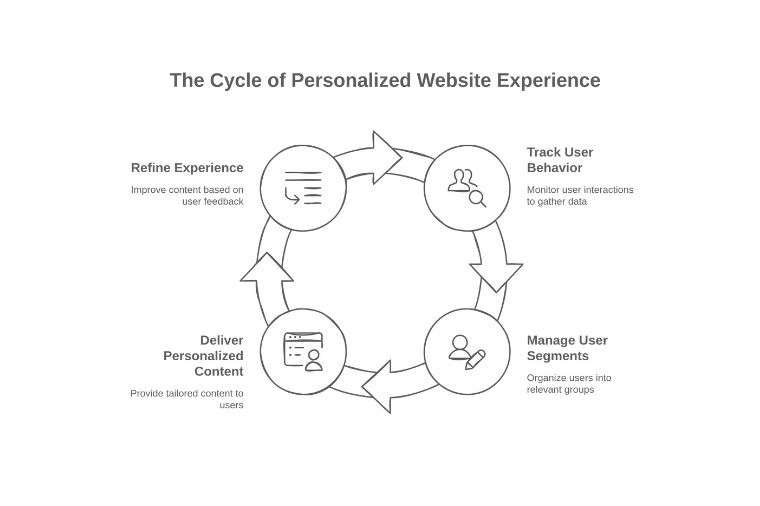
Personalized Websites are the engines in the middle. These applications track behavior, manage user segments, and deliver content that gets adjusted in real time. Be it changing a headline or personalizing product recommendations, the key is to make everything relevant. The real power of these tools comes from their usability: the more people engage with them, the more refined the experience becomes. The importance and utility of these systems cannot be overemphasized. In fact, in an era with such low attention spans and with such high expectations, a one-template-fits-all approach does not work anymore. Personalization tools are ensuring that businesses provide content that fits the moment, thus helping in achieving higher engagement and ultimately better performance.
Why Mobile-First and Personalization Go Hand in Hand
In current days, 96.3% of internet users browse on mobile devices. In other words, 15 percent of adults in the United States go online only using smartphones. This reference to a mobile-centric design is a core aspect of such adaptable experiences. Content now has to be fast and easy to navigate, but more than that, captivating. For this, formats like web stories are gaining momentum. This is how people want to discover content on smaller screens.
Globally reputed brands are already taking the lead. For instance, Spotify creates playlists tailor-made for an individual using listening history data. Netflix looks at its viewers’ behavior to recommend shows and even changes thumbnail images based on which ones are most likely to be clicked by the viewer. Amazon recommends products that are based on past activity, thus proving that personalization is a strong tool in both discovery and decision-making. Those experiences feel personal since they are powered by tools designed for understanding each user.
According to Forrester, content management systems work as the central hub for personalized experiences. They are at the nexus of data and content for brands to create seamless digital journeys. If the right tools are in place, adaptive websites become more than responsive; they become truly unforgettable.
Conclusion
It’s no longer perceived as a luxury to transition from generic websites to adaptive ones; instead, it has become an integral part of modern businesses establishing connections with audiences. Personalization is becoming tangibly evident in user engagement, conversion rates, and customer loyalty. In addition, advancements in machine learning and real-time data tracking promise to have the most enriching potential for hyper-personalization now and in the future. Adaptive websites are the smarter and wiser vehicles of meeting user expectations and guiding meaningful actions.
For the marketers and business leaders, this is an opportunity to rethink what a website can do. Personalization is not just about small changes anymore; it has turned into a bridge that connects the brand with the audience to create experiences that are perceived as thought-out and timely. In the competitive digital space, such attention to detail can make a world of difference. It’s now time to investigate adaptive strategies and build websites that not only react to users but actually understand them.
Author’s Bio:
Vidhatanand is the Founder and CEO of Fragmatic, a web personalization platform for B2B businesses. He specializes in advancing AI-driven personalization and is passionate about creating technologies that help businesses deliver meaningful digital experiences.